Why we're migrating clients from WordPress to EmDash in 2026
For agency owners and SMB marketing leads watching their devs drown in plugin maintenance: here's why we moved off WordPress this year, and what we moved to.
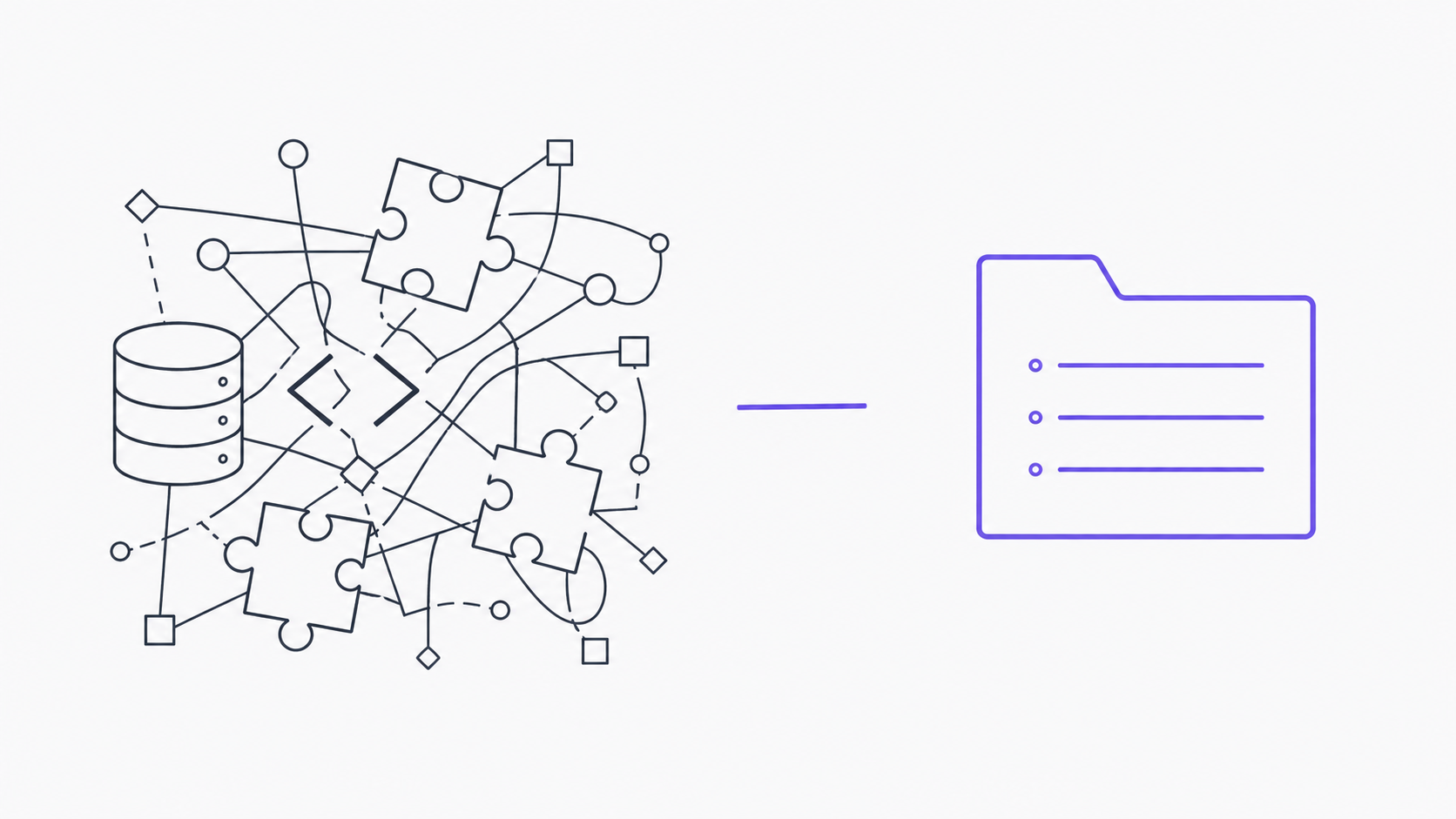
WordPress isn’t broken. It runs almost half the web for a reason — it’s flexible, it’s free, and there’s a plugin for everything. That last part used to be a feature. In 2026, with AI agents now sitting between your marketing team and your codebase, it’s becoming the problem.
This post is for agency owners running 5–50 client sites on WordPress, and for in-house marketing leads who keep filing tickets to change a hero subhead. We’ve been migrating clients off WordPress since Cloudflare announced EmDash on April 1, 2026, and the case is clearer every week. Here’s the honest version.
What changed in 2026
Cloudflare shipped EmDash on April 1. Open source, Apache-licensed, runs on Cloudflare Workers (or Node, or anywhere with a JS runtime). Stack:
- TypeScript end-to-end, Astro 6 for the frontend.
- SQLite locally, Cloudflare D1 in production.
- R2 (or any S3-compatible storage) for media.
- Built-in MCP server — Claude and Cursor can talk to the CMS directly.
- Sandboxed Worker isolates for plugins, with explicit permissions.
- WordPress WXR import out of the box.
The interesting part isn’t any single feature. It’s that the whole thing is structured for AI agents from the foundation up. Content is typed JSON, not blob fields. The schema is introspectable. The CLI outputs JSON that LLMs can parse without hand-holding. There’s an MCP server in the box.
Compare that to a WordPress site running 30 plugins. The “schema” is whatever shape the page builder happens to serialize into a wp_postmeta row this week. Side effects live in functions.php, in mu-plugins, in Code Snippets, in the database options table. AI agents don’t reason about that. Neither do most senior devs after a year away from the code.
The WordPress problem, named honestly
WordPress’s strengths are also why it doesn’t survive contact with AI editing.
No standardized structure
Every WordPress site is a custom stack. A theme, 20–50 plugins, sometimes a page builder (Elementor, Beaver, Bricks, Divi), sometimes ACF, sometimes Gutenberg blocks. Two sites with the same purpose share almost no structure. Claude can’t write a “WordPress edit script” — it has to learn each site from scratch.
Page builders fragment content
Page-builder content is serialized PHP, shortcodes, postmeta JSON, sometimes all three on the same page. Naive find-and-replace breaks length-prefixed serialized strings and silently corrupts the database.
// What "the hero headline" actually looks like in `wp_postmeta`:
a:3:{s:8:"headline";s:42:"Migrate WordPress to EmDash, the right way";s:8:"subhead"...
You can’t teach an AI to safely edit that. You can teach it to safely edit a typed JSON object.
Plugin interdependencies are runtime-only
Plugins call hooks and filters at runtime. Whether they collide is only knowable when the page renders. Update one plugin, break the form on the contact page, find out from the customer who emailed.
Hosting variability
The same plugin behaves differently on WP Engine vs Kinsta vs a shared cPanel host. Caching layers — sometimes three of them — hide the truth during debugging.
What headless WP doesn’t fix
We’ve tried headless WordPress on a few clients. It fixes the frontend delivery layer — you get to use Next or Astro for the rendered site — but the backend is still WordPress. Plugin chaos still happens. Marketers still need to learn WordPress’s editor. You now maintain two stacks instead of one. Partial AI win, full operational tax.
We don’t recommend it as a long-term answer for new builds. For an existing big site that can’t be migrated in one go, it’s a reasonable bridge.
What EmDash actually solves
EmDash’s design choices map almost one-to-one to WordPress’s AI problems:
| WordPress problem | EmDash answer |
|---|---|
| Serialized PHP content | Portable Text JSON, typed schemas |
| Plugin runtime collision | Sandboxed Worker isolates, declared permissions |
| Hooks and filters as side effects | Explicit content-type APIs |
functions.php archaeology | Themes are Astro projects in git |
| ”Where is this page configured?” | Single content type, single source of truth |
| AI can’t reason statically | MCP server ships in the box |
| Database is a serialized blob | SQLite/D1 with introspectable typed tables |
Three of those changes are the ones that matter on a daily basis.
Typed content over blob fields
When a marketer says “make the headline shorter and add a screenshot under the second feature,” Claude can do that on EmDash because the Hero, FeatureGrid, and Image content types are typed objects with known fields. On WordPress, Claude has to guess which page builder you’re using, which plugin renders which section, and which postmeta row holds which string.
MCP-native, not MCP-compatible
You can hook MCP up to almost anything with enough effort. EmDash ships with an MCP server that knows the schema. Claude can list content types, read entries, validate edits, and write back without any of you writing the integration glue.
// What EmDash exposes to Claude via MCP — typed, schema-driven.
const heroes = await mcp.list({ contentType: 'hero' });
await mcp.update('hero', heroes[0].id, {
  headline: 'Faster sites, less developer dependency',
  subhead: 'Done-for-you migrations from WordPress to Astro + EmDash.',
});
Sandboxed Worker plugins
EmDash plugins run in Cloudflare Worker isolates with declared permissions. A misbehaving plugin can’t take down the site or read fields it wasn’t given access to. The “one plugin update broke everything” failure mode goes away by construction.
The migration playbook (in four weeks)
Most marketing sites we touch are 20–80 pages and migrate in four weeks. The shape of the work:
Week 1 — audit. Catalog every page, post, custom field, shortcode, embedded form. We write a content-map document the client signs off on. We name what migrates as-is, what gets cut, what gets rebuilt.
Week 2 — model. Translate the audit into typed EmDash content schemas and Astro components. The marketing team sees preview URLs by end of week.
Week 3 — migrate. WordPress WXR export, content move, redirect map for any URL changes. Link audit. Schema.org and meta-tag preservation. Lighthouse + axe gates passing on every preview build.
Week 4 — cut over and train. DNS flip, 30-minute Claude/MCP training session for the marketing team, 30-day support window opens. The team does their first real edit before we leave.
That’s not magic — it’s the same playbook agencies have used for any CMS migration for 15 years. What’s different in 2026 is that the destination stack happens to be the first one a marketing team can update through Claude without learning a new editor.
FAQ
Is EmDash production-ready in April 2026?
It’s v0.1.0 and six weeks old, so “production-ready” depends on your risk tolerance. The core works, the WXR import is solid, and the Worker plugin sandbox is the genuine architectural advance (Cloudflare blog, 2026). Our internal estimate is a 30–40% chance EmDash becomes meaningfully adopted in 18 months. We ship clients on it because the underlying Astro work is portable.
Can my marketing team really edit the site through Claude?
Yes, that’s the point. EmDash ships an MCP server in the box, and MCP is the standard that lets Claude talk to typed external systems (MCP spec, 2026). Your team writes “shorten the headline and add a screenshot under the second feature” in Claude, and it executes against the typed Hero and FeatureGrid content types. No WordPress editor, no shortcode hunting, no praying.
What happens if EmDash fails to take off?
You still own the site. The frontend is a normal Astro project — components, pages, content collections, all in your git repo and documented in the Astro docs (Astro docs, 2026). Migrating from EmDash to Sanity, Payload, or Decap is a few weeks of work, not a rebuild. We design every migration with that exit in mind. The structure is the asset.
Is EmDash actually free?
Yes, Apache 2.0 licensed and open source. The code is public on GitHub (EmDash GitHub, 2026). You pay for hosting (Cloudflare Workers + D1 + R2, typically $0–20/month for a marketing site) and any commercial plugins or themes you choose to buy. There’s no per-seat license, no enterprise tier gate, no telemetry phone-home. Self-host if you want.
Do I need to host on Cloudflare?
Technically no — EmDash runs anywhere with a JS runtime, including Node and Bun. Practically yes, for now. The reference deployment uses Cloudflare Workers (Cloudflare Workers docs, 2026), D1, and R2, and that’s where the plugin sandboxing model is most battle-tested. Other targets work but have rough edges. We deploy every client on Cloudflare and revisit in 12 months.
Who shouldn’t migrate
The honest part of this post.
E-commerce stores running WooCommerce. EmDash isn’t an e-commerce platform yet. Stay on Woo or move to Shopify. Don’t even ask us — we’ll tell you the same thing on the intro call.
Sites with deep membership/paywall integrations. WordPress’s auth and membership plugin ecosystem (MemberPress, Restrict Content Pro, etc.) is a long way ahead of anything EmDash has. Migrate the marketing site, leave the gated content where it is.
Anyone who already has a working AI workflow. If your team is shipping copy changes happily on WordPress with a custom Cursor/Claude setup, don’t break what works. We’ll happily do a 30-minute audit call and tell you to keep what you have.
Sites that depend on a specific plugin nothing else replicates. There’s no equivalent of, say, FacetWP or LearnDash on EmDash yet. Custom-build is sometimes possible; sometimes the answer is “stay on WordPress for now.”
We charge a flat fee for the intro call’s scoping output regardless of whether you sign with us, so the math is honest on both sides.
What this stack costs to run
A migrated site running on Cloudflare Pages + EmDash on Workers + R2 typically costs $0–20/month in hosting for the kind of marketing site we work on. Compare that to the $30–80/month a WordPress site usually pays for hosting (managed WP host) plus another $20–60/month for plugin licenses (security plugin, backup plugin, page builder, ACF Pro, etc.). Our migrations pay for themselves in hosting savings inside 24 months on a typical SMB site, before counting the productivity gain on the marketing team.
What we’re betting on (and what we’re hedged on)
EmDash is six weeks old at the time of writing. Our internal estimate is a 30–40% chance it becomes a meaningfully adopted CMS in the next 18 months. That’s not a high enough number to bet a client’s site on the platform alone — so we don’t.
What makes the migration safe is that the work is portable. Astro components and structured content move cleanly to Sanity, Payload, or Decap with a few weeks of work. We rebuild your site with the assumption that EmDash might fail to take off and you might need to swap CMSes in two years. The structure is the asset; the CMS underneath is a swappable component.
That portability is also why we don’t sell “EmDash migrations” — we sell “migrate off WordPress, end up somewhere your team can edit through Claude, with the structure portable enough to move again if we have to.” EmDash is the current best target for that, but the work survives if it isn’t.
The next post
The next cornerstone post is a hands-on walkthrough — the four-week WordPress→Astro+EmDash migration playbook, step by step, with the actual wrangler.toml, the redirect-map template, and the Search Console checks we run on cutover. If you’d rather skip the reading and just talk, the intro call is below.
If you’re an agency owner deciding whether to learn EmDash or wait it out, the answer for us was: learn it now, ship one client on it, and reassess in 90 days. We’re three clients in. None has asked to go back.
Keep reading
 migrations P1 · cornerstone
 How to migrate a WordPress site to Astro + EmDash (a four-week playbook)
For developers and agencies running 20–80-page WordPress marketing sites — the exact four-week sequence we use, with the audit checklist, the redirect template, and the Search Console checks.
 migrations P2
 Static site to EmDash: when to skip the migration and just rebuild
For the marketing lead at a small SaaS whose 30-page hand-coded HTML site has become a dev bottleneck: when migrating to a CMS makes sense, when starting fresh on EmDash + Astro is faster, and the surprisingly common third option — leave it alone.
 emdash P3
 Six weeks evaluating EmDash for production work: what we learned before betting on it
For the agency owner who's read all the EmDash hype and wants the boring version: what we measured across six weeks of building, evaluating, and pitching EmDash work — before any client site went live. The bugs, the gaps, the things we'd wait on, and the things that already work.